
Yoga for Stress Relief: 5 Poses That Calm Your Nervous System
Stress is not just a mental experience — it lives in the body. When the nervous system is overactivated, we may feel anxious, restless, tired but unable to sleep, or constantly “on edge.” Yoga offers a powerful way to shift us out of this state and guide the body back into balance.
This practice is not about pushing or performing. It’s about slowing down, breathing deeply, and sending a clear signal of safety to your nervous system.
Below are 5 simple yet powerful yoga poses that help calm the nervous system and release accumulated stress.
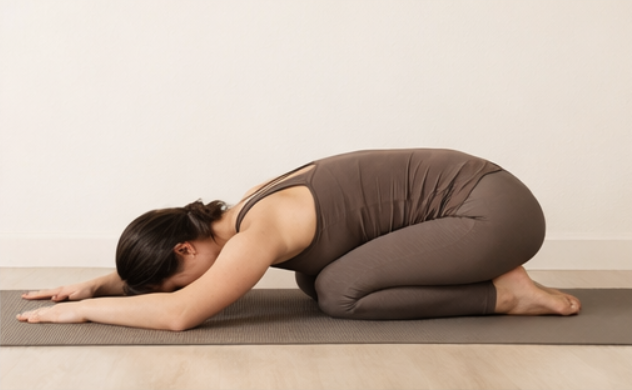
1. Child’s Pose (Balasana)
Child’s Pose is one of the most grounding postures in yoga. It gently invites the body into a state of rest and inward focus.
How it helps:
Calms the mind
Relaxes the lower back
Activates the parasympathetic nervous system (rest & digest mode)
How to practice:
Kneel on the mat, bring your big toes together, and sit back on your heels. Fold forward, extending your arms in front or placing them alongside your body. Let your forehead rest on the ground.
Stay for 1–3 minutes, breathing slowly into your back body.
2. Forward Fold (Uttanasana)
Forward folds naturally turn your attention inward, helping quiet mental noise.
How it helps:
Releases tension in the spine and hamstrings
Encourages blood flow to the brain
Reduces mental fatigue
How to practice:
Stand with feet hip-width apart. Slowly fold forward from the hips. Let your head and arms hang heavy. Keep knees slightly bent if needed.
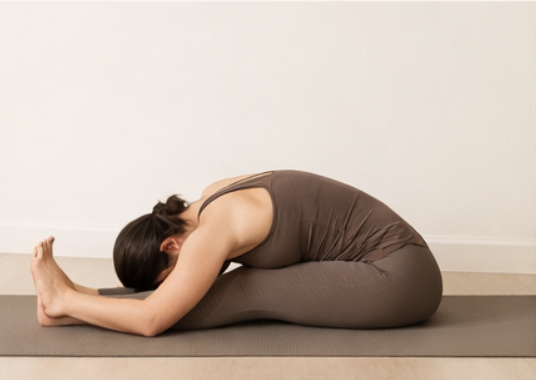
Hold for 30 seconds to 2 minutes. Breathe deeply.
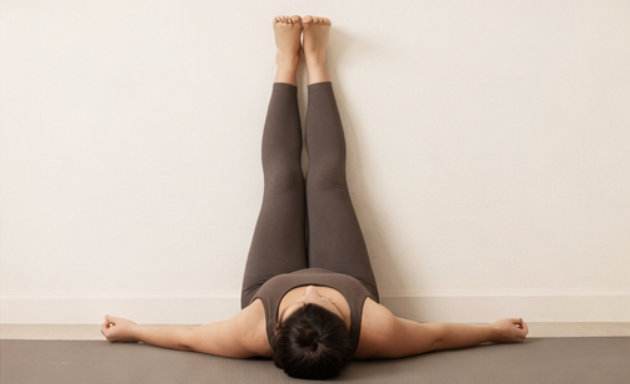
3. Legs Up the Wall (Viparita Karani)
A deeply restorative posture that requires very little effort but has a strong calming effect.
How it helps:
Reduces anxiety and fatigue
Supports lymphatic drainage
Helps regulate the nervous system
How to practice:
Sit sideways next to a wall, then swing your legs up as you lie on your back. Your sit bones can be close or slightly away from the wall depending on comfort.
Stay for 5–10 minutes. Close your eyes and let the breath slow down naturally.
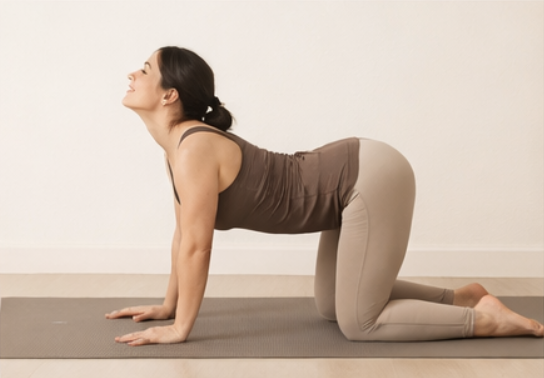
4. Cat-Cow (Marjaryasana-Bitilasana)
This gentle spinal movement helps release physical tension stored in the back and shoulders.
How it helps:
Improves spinal mobility
Connects breath with movement
Releases emotional tension stored in the body
How to practice:
Come to all fours. Inhale, arch your back and open your chest (Cow Pose). Exhale, round your spine and tuck your chin (Cat Pose). Move slowly with your breath.
Continue for 1–3 minutes.
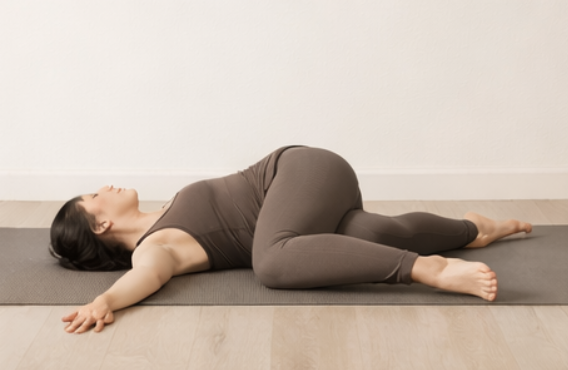
5. Supine Twist (Supta Matsyendrasana)
Twists are deeply detoxifying and help release both physical and emotional tension.
How it helps:
Releases tension in the spine
Massages internal organs
Supports emotional release
How to practice:
Lie on your back, hug your knees to your chest, then drop them gently to one side. Extend your arms in a T-shape. Turn your head in the opposite direction if comfortable.
Stay for 1–2 minutes on each side.
Closing Reflection
Stress is not something to fight against — it is something to regulate through awareness, breath, and gentle movement.
Even 10–15 minutes of these poses can create a noticeable shift in your nervous system. The key is consistency and softness.
Yoga is not about doing more. It is about coming back to yourself.